City’s lid innovation
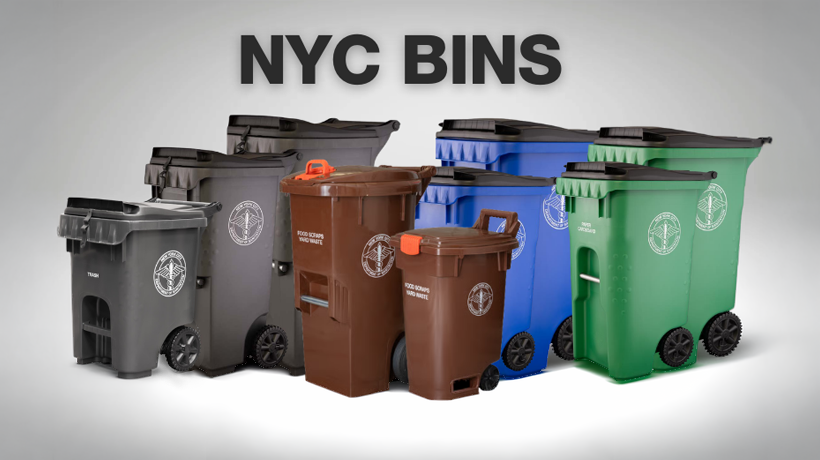
Table of content:
Introduction: Page 2
History/Past attempts: Page 3-4
How we’re different: Page 5
Images of different NYC trash cans full or in general: Page 6
Technical Description of our innovation: Page 7
Images of our “drafts” of the idea(3D models or just pictures of parts): Page 8
How?: Page 9
Introduction
When you think of NYC, one of the first things that comes to mind is the Big Apple, Yankee Stadium, Times Square, and other landmarks. But one thing they all have in common is that there is trash everywhere, causing an unpleasant smell, ruining the experience, and making it impossible to get anywhere without seeing a pile of trash. There have been many attempts in trying to solve this issue, but never really succeeded. Different ideas have been proposed, but the route our group chose to go down is making smart trash cans that can tell you when they’re full and make the best route to get all of the trash as efficiently as possible.
History/Past attempts
One well-known past attempt to solve this problem was Bigbelly, a company from Massachusetts that started in 2003. It was created because people saw that regular trash cans were causing a lot of problems in busy public areas, especially when bins would overflow and make the streets look dirty and smell bad. Another problem was that garbage trucks had to keep stopping at trash cans even when they were not full yet, which wasted time, labor, and fuel. Bigbelly tried to fix this by creating a solar-powered smart trash can that could compact trash, hold much more waste than a normal bin, and send alerts when it was full. This was a smart idea because it helped reduce the number of collections needed and made waste management more efficient. Boston later used these smart trash cans in parts of the city, which showed that the idea could actually work in real public spaces. Even though the system was successful in some ways, it still did not spread enough to make a huge impact on the whole city or on other places with the same trash problem. A big reason for that is that systems like this can be expensive to make, install, and maintain, especially if a city wants to place them in many different areas. In our eyes, this is one of the biggest reasons why past attempts like this did not fully solve the problem. The idea itself was strong, but the cost, time, and resources needed made it harder for the system to grow on a larger scale.
Our innovation isn’t something newly invented but there were past attempts of this product, one being Bigbelly, a company from Massachusetts, started in 2003. It was invented for its purpose to solve the overflowing of garbage waste, and….
- Replace regular public trash bins, improving waste management, and cleanliness of the streets.
- Improve the system of DSNY, collecting garbage in bins that are full, reducing the number of collections needed.
A solar powered smart trash can that could compact trash, which would retain more waste and it sent alerts when it was full. Although this idea was very smart, its overall impact wasn’t sufficient to replace trash bins on the whole city or on a larger scale. Its reason in which it wasn’t successful and impactful enough was the cost, resources, and time needed.
How we’re different:
The idea of smart trash cans leads to the problem of where the large number of trash cans would need to be charged. A company from Massachusetts was created by college students involving a solar-powered trash compactor that can hold up to 5 to 10 bins of waste. This innovation had a great impact since it reduced collections by up to 80%. The cost of these trash cans could be a tiny issue since this specific company had them manufactured in Germany.
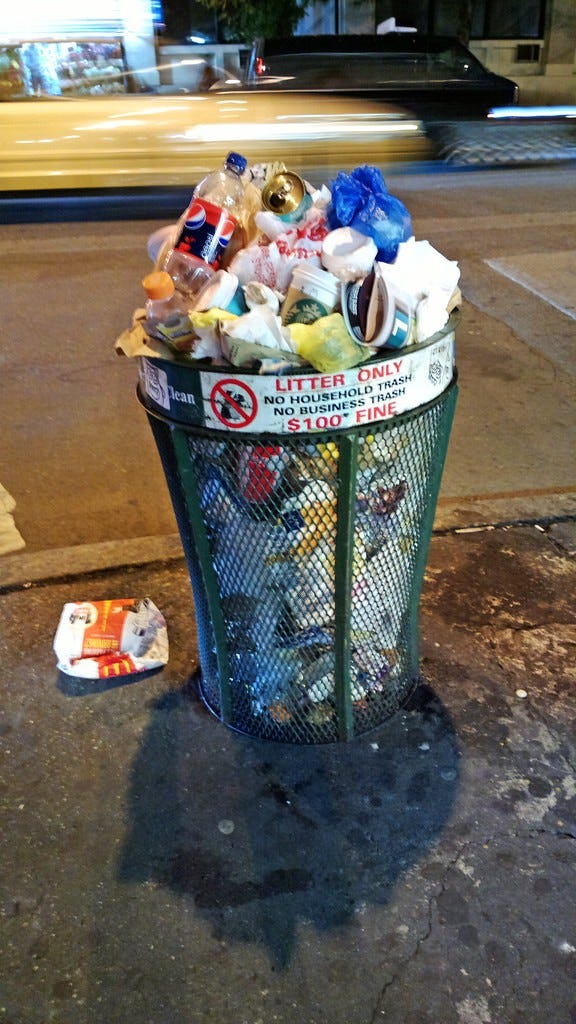
Images of different NYC trash cans full or in general:
Technical Description of our innovation:
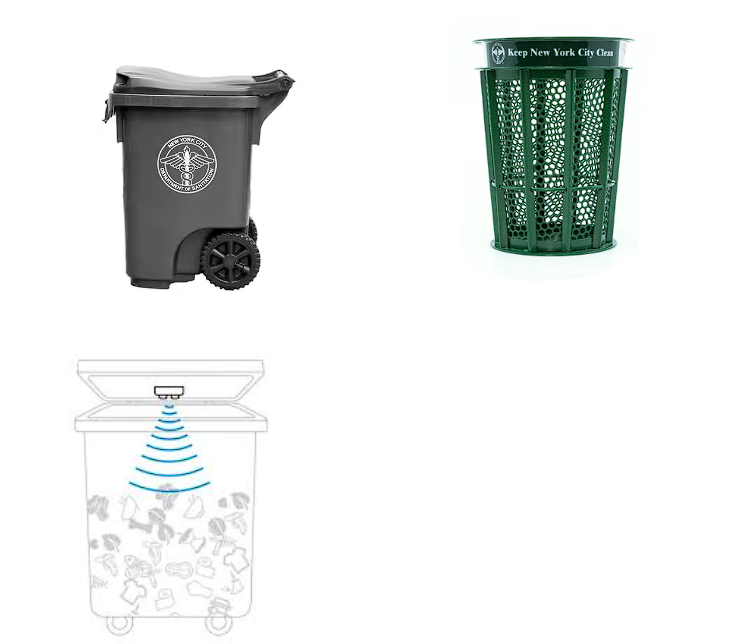
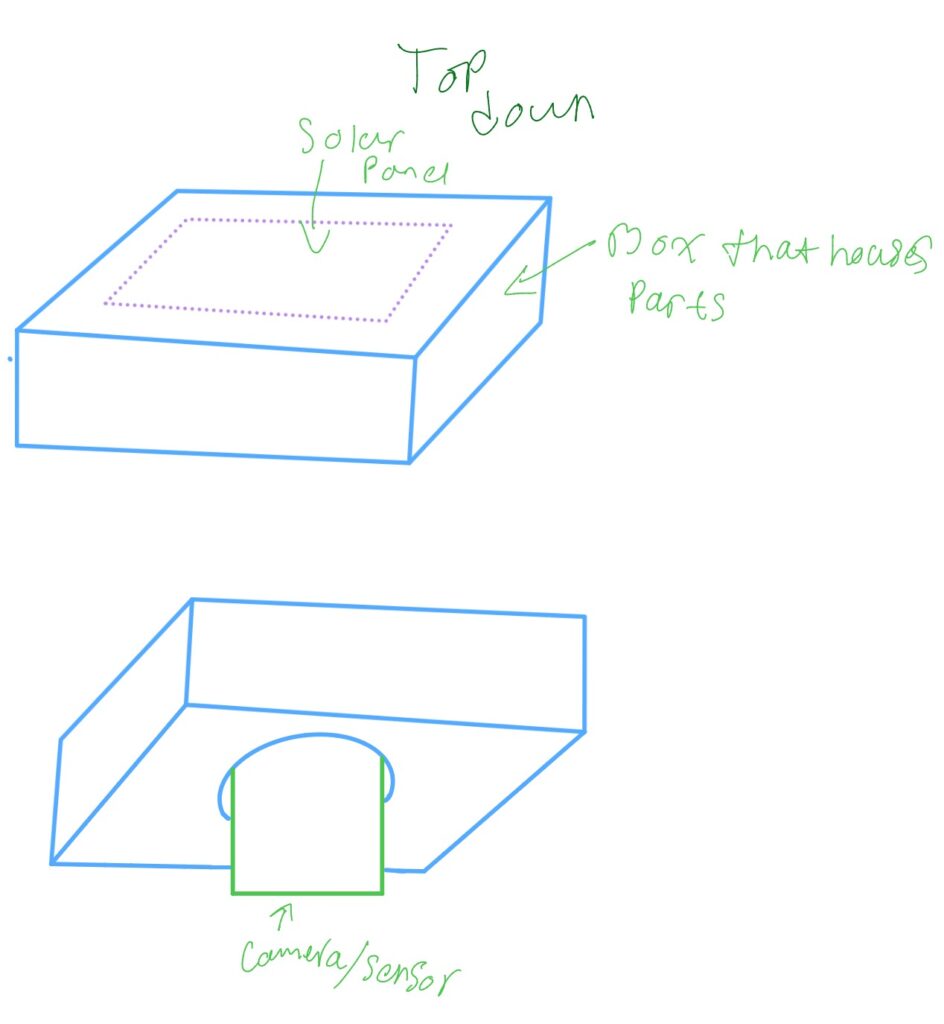
The solution that we propose not only resolves the issue of trash pollution all over NYC, but this smart design of a trash can would provide significant advantages, including improved ergonomics for sanitation workers, enhanced rodent resistance, and increased operational efficiency. These smart trash cans are lightweight and easier to handle efficiently, from placing the trash cans to the disposal of waste, which would reduce injuries and improve waste management. Retrofitting old trash cans instead of making new ones makes much more sense, and data collected can be used to make the current collection system more efficient. The smart trash can uses an ultrasonic sensor to detect how full the can is, and the ESP32 microcontroller processes that data to monitor the trash level. A rechargeable battery and small solar charger power the system, while a weatherproof enclosure protects the electronic parts for outdoor use.
Images of our “drafts” of the idea(3D models or just pictures of parts):
How?
For a bulk order, the cost would go down a lot compared to buying one prototype at regular prices. If we were making around 1 million units, the parts could cost about $5.73 million to $7.25 million total if we use cheaper bulk parts and a more realistic mass-production setup. In the absolute best-case situation, it could be as low as about $4.15 million, but that is a very aggressive estimate. This only covers the parts, though, and does not include other important costs like shipping, labor, testing, assembly, and the services needed to keep the system working. For example, we would need a programmer or contractor to create a website that collects data from the smart trash cans so sanitation workers or trash truck drivers can know which cans are full. We would also need installation and maintenance services to make sure the sensors, batteries, and other electronic parts keep working properly over time. For labor and manufacturing, we are planning on taking our innovation to China, where large-scale production would likely be cheaper and easier to manage. Overall, buying in bulk would make the project much cheaper per unit and would help a lot if we wanted to produce the product on a large scale.
References:
- https://www.core77.com/posts/89489/Smart-Design-on-Redesigning-NYCs-Iconic-Trash-Can
- https://www.bloomberg.com/news/newsletters/2024-07-10/mayor-eric-adams-new-trash-can-for-new-york-garbage-is-no-joke
- https://www.nytimes.com/2023/09/13/nyregion/new-york-city-trash-cans.html
Images:

